

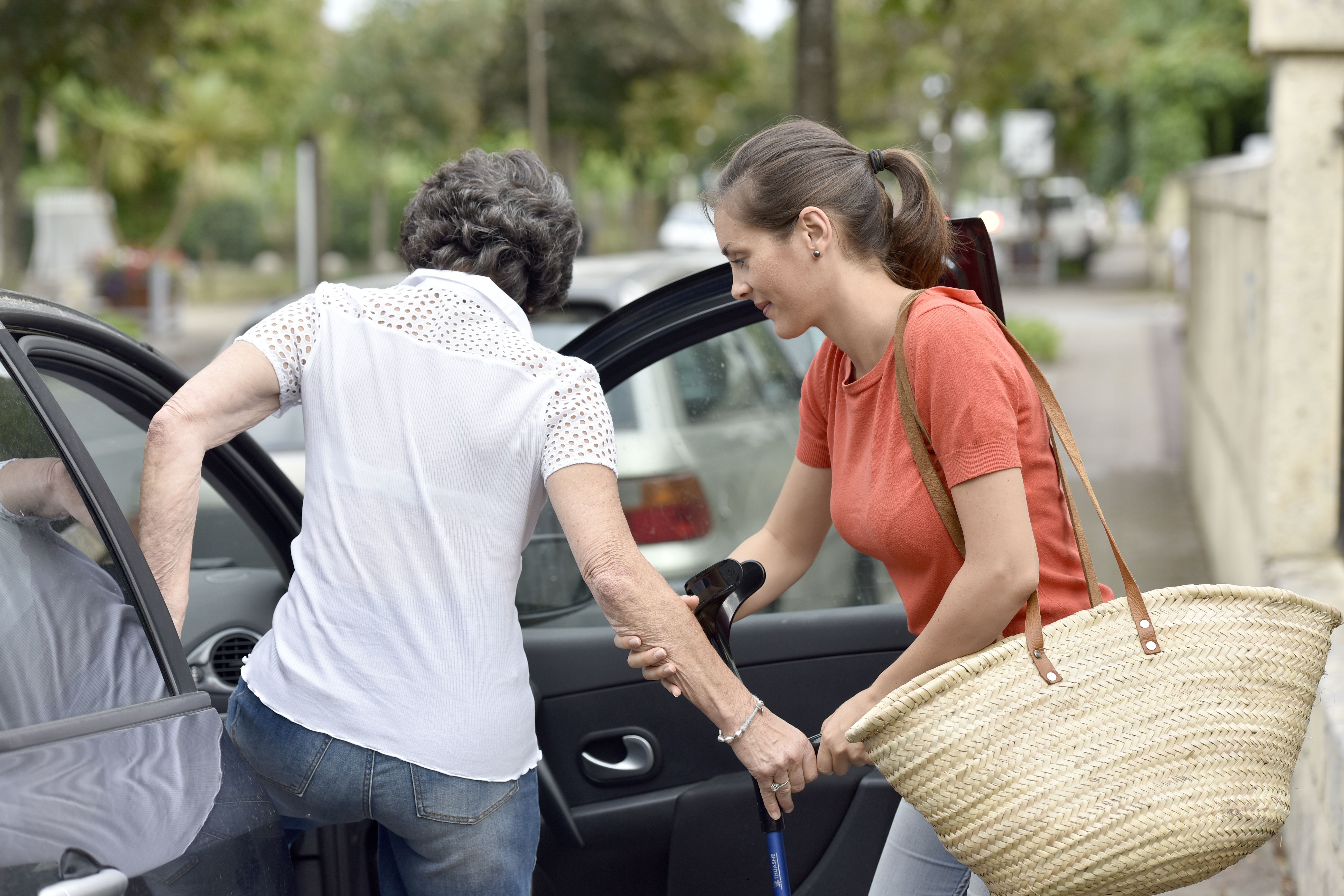
What to Do When You're the First One in Your Friend Group to Stop Driving
The identity shift, the practical alternatives, and how to ask for help without feeling like a burden.
There's a particular loneliness in being the first.
Not the first to retire, or the first to lose a parent, or even the first to move to a smaller place. Those transitions have scripts. People know how to talk about them. But being the first in your circle to stop driving — to hand over your keys or let your license lapse while everyone around you is still pulling out of driveways and meeting for lunch on their own schedule — that's something most people navigate without a map.
And it's more common than it looks from the outside. Most people don't stop driving because they want to. They stop because a health condition changed the math, or because a doctor raised a concern they couldn't argue with, or because something happened on the road that scared them in a way they couldn't shake. And then they're home, with the car still in the garage or already sold, trying to figure out who they are now and how they're going to get anywhere.
If that's where you are — or where someone you love is heading — this is for you.
The Part Nobody Talks About: What Driving Actually Meant
A car key is not just a car key.
For most people who grew up in the mid-twentieth century, getting a driver's license was a rite of passage that meant something deep: freedom, adulthood, the ability to move through the world on your own terms. Driving wasn't just transportation — it was competence made visible. It was being the person who picks others up, who runs the errand, who says "I'll drive" and means it.
When that ends, the practical loss is real. But the identity loss is what catches people off guard.
Suddenly there are things you can't do without asking. Appointments you can't keep without coordination. Spontaneous plans that are no longer spontaneous. A social life that used to be self-managed now requires something that feels uncomfortably like dependence. For people who have spent decades being independent — who built their sense of self around not needing help — that shift can be quietly frustrating.
It's worth naming that directly, because it often goes unnamed. People focus on logistics. They make lists of who can drive them where. They download apps and research bus routes. They handle the practical layer while something more personal sits underneath, unexamined.
You're allowed to grieve this. Quietly or out loud, with a friend or in the privacy of your own thoughts — it's a real loss, and pretending otherwise doesn't speed anything up.
Why Being First Makes It Harder
If everyone in your circle had already been through this, the path would be clearer. There'd be people who knew which ride service was easiest to use, which routes were actually walkable, which friends were genuinely willing to help versus which ones offered and then got hard to reach.
But when you're first, you're building without a template. And you're doing it in a social context where everyone else still has their keys, which means the natural rhythms of your friendships — who drives to whose house, who picks whom up for church or a movie or a doctor's appointment — all need renegotiation. That renegotiation can feel awkward in ways that are hard to articulate.
There's also the question of what your friends assume about you now. Competent people don't always want to be seen asking. They worry that needing a ride will change how they're perceived — that they'll become someone others feel sorry for rather than someone others enjoy spending time with. That worry may or may not be realistic. But it's real, and it shapes how people ask for help and whether they ask at all.
Asking for Help Without Feeling Like a Burden
This is where most of the emotional weight ends up. And the thing that makes it harder is that the worry about being a burden is often paired with a real reluctance to find out whether it's true.
Here's what's actually true, most of the time: people who care about you want to help. Not out of obligation, but because helping someone you like is satisfying. The friend who drives you to your cardiologist appointment doesn't experience it as a hardship — they experience it as an hour of conversation with someone they enjoy. The dynamic you fear, where you become a burden, usually only develops when people don't ask at all and then suddenly need something in a crisis, or when asking isn't mutual over time.
Mutuality is the key. You may not be able to drive anyone anywhere anymore. But you can still be the person who remembers a birthday, who calls to check in, who hosts lunch instead of going out, who listens without an agenda. The relationship doesn't have to become transactional in one direction just because one of its logistics has changed.
Some things that make asking easier:
Ask specifically rather than generally. "Can you give me a ride to my appointment on Tuesday at 2?" is easier to say yes to than "I don't know how I'm going to manage getting around." Specific requests give people something concrete to respond to, and they prevent the vague, escalating anxiety that open-ended need can create.
Ask more than one person. Not every ride has to come from the same friend. Building a loose network of three or four people who know you might occasionally need help spreads the weight and keeps any one person from feeling overwhelmed — even if they wouldn't have.
Acknowledge it briefly and move on. You don't need to apologize at length or over-explain. "I'm not driving anymore, so I'm figuring out new logistics" is a complete sentence. People take their cues from you. If you treat it as a manageable transition, most of them will too.
The Practical Layer: What Your Options Actually Are
Once the emotional ground has been covered — or at least acknowledged — the practical questions deserve honest, realistic answers.
Rideshare services like Lyft and Uber are available throughout the East Valley and have improved significantly in terms of accessibility for older adults. Lyft in particular has a program called Lyft Healthcare that some medical providers use to arrange rides for patients.
Valley Metro operates bus and light rail throughout the Phoenix metro area, including Mesa. If you're comfortable with a schedule-based option and live along a served route, this can be a genuinely independent solution. Valley Metro also offers a Reduced Fare program for riders 65 and older.
Dial-a-Ride is a paratransit service available to people who cannot use fixed-route transit due to a disability. It requires an application and advance scheduling, but it's a dedicated, affordable option for those who qualify.
Aster's Neighbors Program connects qualifying older adults in the East Valley with volunteer drivers who can provide rides to medical appointments, grocery stores, and other essential destinations up to one time per week. It's free, it's community-based, and the volunteers are local.
Medical transportation is a separate category worth knowing about. If you have Medicaid, non-emergency medical transportation (NEMT) is a covered benefit — meaning you can get rides to doctor appointments at no cost, you just need to request them in advance through your plan. Many Medicare Advantage plans now include transportation benefits as well; it's worth calling your plan to ask.
Family and friends, honestly organized. If family members are willing to help, the most sustainable version of that help is usually the most explicit one: a regular errand day, a standing appointment pickup, a shared calendar. Informal arrangements that rely on everyone just remembering tend to break down.
Things That Make Your Life More Manageable Regardless
Stopping driving is a good moment to look at everything you've built around the assumption of a car — and ask what needs to adapt.
Grocery delivery has become mainstream and is available in the East Valley through several services, including from most major grocery chains. For someone who previously spent twenty minutes driving to a store, forty minutes shopping, and twenty minutes driving home, ordering online and having groceries delivered can reclaim a meaningful chunk of time and energy.
Telehealth appointments are now offered by many medical providers for follow-up visits and certain types of consultations. Not every appointment can happen over video, but some can — and knowing which ones removes those from the transportation equation entirely.
Meal programs can fill the gap when getting to a grocery store is difficult and cooking for one feels like too much. Aster's Meals on Wheels program delivers to homebound seniors who can't easily get out.
Where you live matters more without a car than it did with one. If you're in a house that requires a car for everything, this is a reasonable moment to think about whether that still makes sense — not as a crisis, but as a long-term question worth asking.
When the Decision Isn't Fully Yours
Not everyone who stops driving has chosen to. Some have had licenses suspended following a medical event. Some were told by a doctor, or by a family member, in terms that left little room for debate. Some stopped after an accident — theirs or someone else's — that made the decision feel final.
If the decision wasn't yours, or didn't feel fully voluntary, there's likely more grief in it than there would be otherwise. There may also be anger — at the body that changed, at the people who pushed the issue, at a situation that feels unfair because it is.
That's worth honoring, too. Being angry about a loss doesn't mean you're handling it wrong. It means it mattered.
What's worth watching is whether the anger or grief starts to keep you home, starts to thin out the social connections that make life good. Isolation after major transitions — and this is a major transition — is a real risk, and it tends to compound quickly. The less you go out, the harder going out feels. The fewer people you see, the smaller your world gets.
If you notice that happening, say something to someone. A friend, a family member, a doctor. Aster's Outreach & Social Services team exists, in part, for exactly this kind of transition — not just to connect people with resources, but to help think through what a good version of the next chapter actually looks like.
What the Other Side Looks Like
Here's what's actually true about people who navigate this transition well: they don't find a perfect alternative to driving. They build a new system that works well enough, and they stay connected to the people and activities that matter to them. The logistics are different, but the life isn't smaller.
Being the first in your friend group to stop driving means you're also the first one in your friend group to figure out how to do it well. There's something worth claiming in that, even if it doesn't feel like it right now.
Resources
Aster's Neighbors Program offers essential transportation for qualifying older adults. For information, call 480-629-5502 or fill out a brief web form.
Aster's Outreach & Social Services team provides free, confidential consultations to help older adults navigate transportation options, benefits, and community programs. Call 480.634.1659 or reach out through our website.
Aster's Senior Centers — at Mesa Downtown and Red Mountain — offer congregate meals, social programming, and more, Monday through Friday, 8 am to 4 pm. Call 480-964-9014 for more information.
Valley Metro offers bus, light rail, and Dial-a-Ride paratransit throughout the Phoenix metro area, with reduced fares for adults 65 and older.


