

The Friends You Make After 60 Are Chosen. That Makes All the Difference.
We tend to talk about friendship in later life as a challenge — something that gets harder as the years go on, something to be maintained and protected against the natural forces of distance and change. There's truth in that. But it's only half the picture, and arguably the less interesting half.
The other half is this: the friendships available to you after 60 are, in a meaningful sense, the most intentional ones you've ever had access to. For the first time in your life, you are choosing them with full information — about who you are, what you value, what you actually enjoy, and what kind of people bring out a version of yourself you like. That is not a small thing. Most people spend decades getting to this point.
How the friendships of youth actually formed
Cast your mind back to how your earliest friendships came together. In most cases, the honest answer is: proximity. You lived on the same street. You were assigned to the same classroom. You started the same job in the same week and ended up eating lunch together out of mutual convenience. The friendship grew from there, and some of those friendships became genuinely deep and lasting. But the seed of them was largely accidental — a function of geography and timing rather than genuine affinity.
This is not a criticism of those friendships. Some of the most important relationships in a person's life form exactly this way, and the shared history that accumulates over decades has its own irreplaceable value. But it's worth being honest about how much of early friendship is circumstance dressed up as connection. You liked each other, yes. You also happened to be there.
The same is true of friendships built around roles — the parent friendships that formed because your children were the same age, the work friendships that thrived in the context of a shared office and a shared project, the social ties that belonged more to a chapter of life than to the people themselves. When the chapter ends, some of those friendships reveal themselves to have been situational all along. That's not a failure. It's just an honest accounting of what they were.
"For the first time in your life, you are choosing friends with full information — about who you are, what you value, and what kind of people bring out a version of yourself you like."
What changes after 60
By the time most people reach their sixties, a clarifying process has been underway for some time. You know, with a specificity that wasn't available to you at 25, what you find genuinely interesting versus merely tolerable. You know the kinds of conversations that leave you energized and the kinds that leave you flat. You know whether you need a lot of time alone or very little, whether you prefer deep one-on-one connection or the easy warmth of a group, whether humor matters to you in a friendship or whether you'd trade it for earnestness. You know, in short, who you are — and therefore who you're actually looking for.
This self-knowledge doesn't make making friends effortless. But it makes the friendships that do form more accurately matched to who you actually are, rather than who you happened to be standing next to at a formative moment. There is less performance involved, less figuring out how to present yourself, less wondering whether the other person would still like you if they knew you better. You already know yourself. You're reasonably confident they will or they won't, and you're at peace with either.
Later-life friendships also tend to form between people who have, by definition, lived. They have navigated loss and change and difficulty, have come through things and been shaped by them. The resulting depth of character — in yourself and in the people you're meeting — makes for richer material than the relatively unweathered selves that were doing the friend-making at twenty-two.
The freedom of friendship without stakes
One of the quieter gifts of later friendship is that it tends to exist outside the arenas of competition and comparison that complicated so many earlier relationships. The career isn't a factor. The performance review is not happening. Nobody is on a faster track than anyone else, nobody is being promoted over anyone else, nobody's success reflects on or threatens anyone else's. You can simply be glad for each other, without the complicated undertow that ran beneath so many relationships during the working years.
There is also, often, a greater willingness to be honest — with yourself about what you want from a friendship, and with the other person about who you are. The social maneuvering that consumed a lot of energy in earlier decades tends to quiet down. People say what they mean more directly. Time feels more valuable, which makes spending it on pretense feel less worth it. The result is friendships that get to depth faster and stay there more comfortably.
Where new friendships actually form
The mechanism of later-life friendship is essentially the same as it has always been: shared space, repeated contact, and enough time for the initial unfamiliarity to give way to ease. What changes is that you're now walking into those shared spaces as a fully formed person who knows what they're looking for.
A class you attend regularly. A table you return to each week. A volunteer commitment that puts you alongside the same people doing the same work. An activity you've taken up seriously enough to pursue in the company of others who have too. The friendships that form in these contexts are chosen — not by accident of birth or assignment, but by the fact that you and this other person keep showing up to the same place because you both care about the same thing. That shared caring is a better foundation than shared geography ever was.
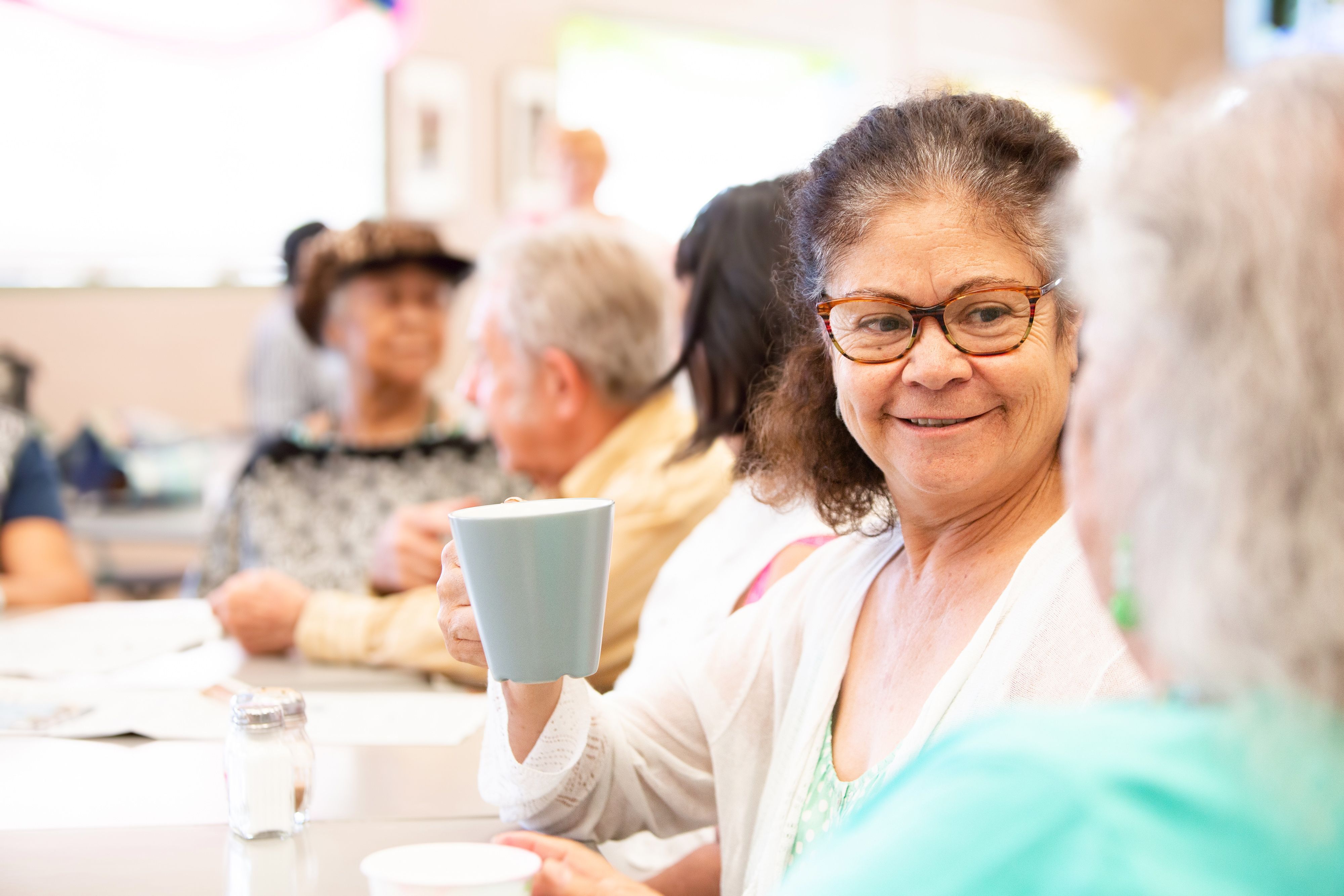
Aster's Senior Centers are full of these contexts — a lunch table that becomes yours over time, a class where the faces become familiar and then welcome, a game of bingo that is, on its surface, about bingo and is, in practice, about the people you play it with. The specific activity is almost beside the point. What matters is the regularity, and the room, and the people in it who keep coming back.
Aster's Senior Centers are open Monday through Friday with daily lunch, rotating activities, classes, and programs for older adults across the East Valley. New faces are always welcome — and regulars are always glad you came back.
Click here to learn more about our Senior Centers and how you can get involved.
On staying open
The one thing that gets in the way of all of this is a decision — usually made quietly and without much fanfare — that the season for making new friends has passed. That the people worth knowing have already been found, that the effort isn't worth it at this point, that new friendships at this stage won't have time to amount to much anyway.
This is understandable. It is also, by most accounts of people who have made meaningful friendships in their sixties, seventies, and eighties, simply not true. Friendships made late can accumulate depth with surprising speed, especially between people who have stopped pretending and started simply being present with each other. The years available are uncertain for everyone, at every age. What is available, right now, is a room full of people who haven't met you yet.
That's not a small thing. That's actually quite a lot to look forward to.


