

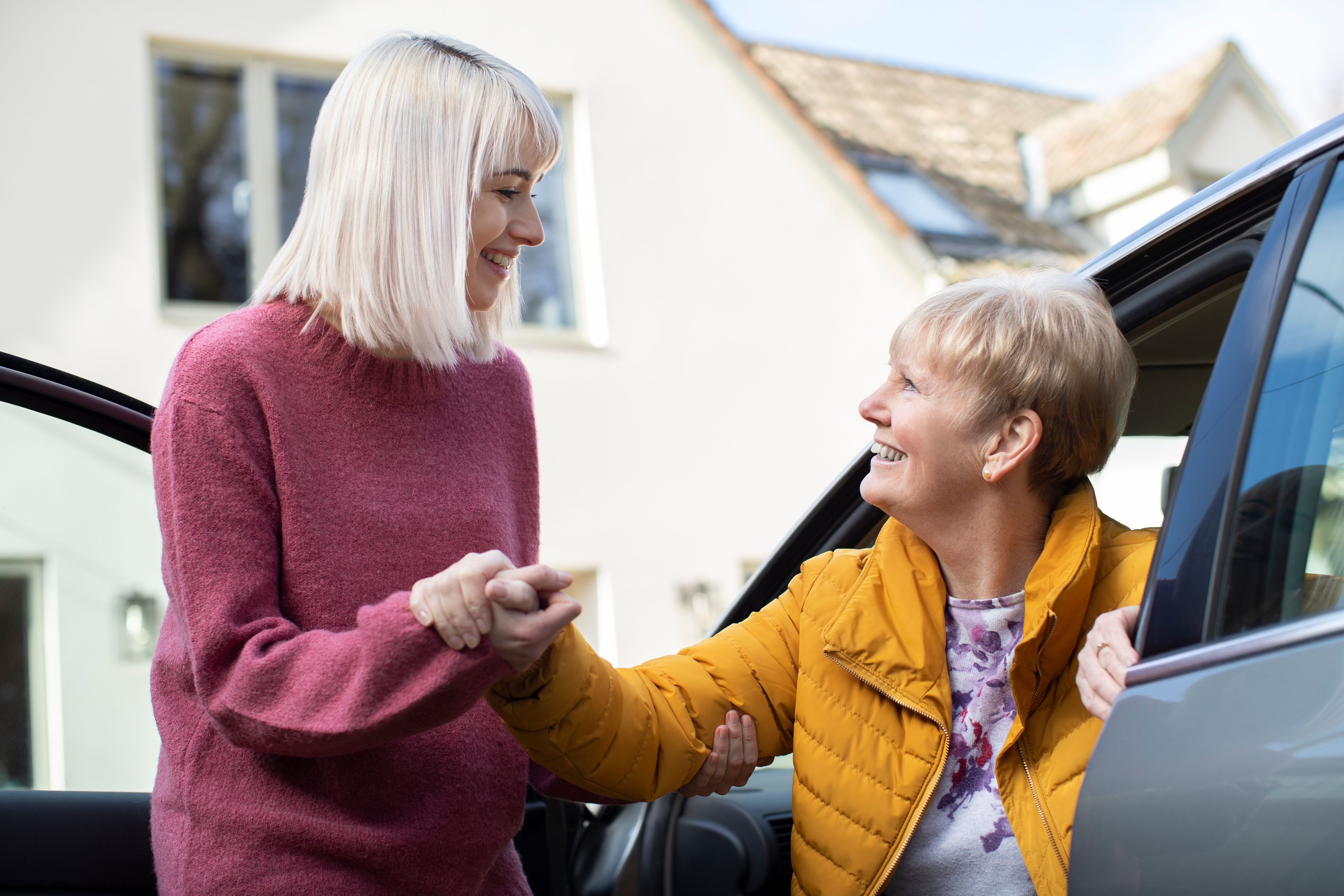
How East Valley Volunteers Help Seniors Get to Medical Appointments
In the East Valley, one of the most common barriers to aging independently is transportation.
A doctor may be available. A clinic may be nearby. A prescription may be ready. But without a reliable way to get there, routine care becomes inconsistent, and small health issues quietly become larger ones.
This is the gap that volunteers help close through the Neighbors Program at Aster Aging.
The simple problem with serious consequences
For many older adults, driving eventually stops being safe. Vision changes, mobility limitations, and cognitive decline all play a role. When that happens, independence does not disappear all at once. It erodes appointment by appointment.
A missed check-up becomes a delayed diagnosis. A missed pharmacy trip becomes a lapse in medication. Over time, the pattern is predictable: fewer appointments, less preventative care, more emergency interventions.
The Neighbors Program exists to prevent that pattern.
What volunteer support actually looks like
Volunteer involvement is intentionally practical.
In most cases, it looks like this:
- A volunteer drives an older adult to a medical appointment
- They wait if needed, or return at a scheduled pickup time
- The senior gets home safely afterward
Other forms of support exist alongside transportation:
- Friendly visits
- Phone check-ins that help reduce isolation between visits
The most urgent need today is for more volunteers willing to provide rides.
A system built around real availability
Medical appointments happen when clinics are available, often during standard weekday hours.
Neighbors Program volunteers choose selectively from available rides. There is no expectation to accept every request.
Volunteers typically:
- Select rides that fit their schedule and location
- Participate only when they are available
- Step in more during some periods and less during others
- Take time away entirely when needed, including travel periods
This flexibility is what makes participation realistic for retirees and active adults.
What makes these rides significant
A medical appointment may take an hour. The impact of getting there extends far beyond that hour.
For seniors, these rides often determine whether they can:
- Manage chronic conditions consistently
- Maintain prescriptions without interruption
- Receive early treatment instead of emergency care
- Stay safely in their own homes longer
There is also a quieter dimension. Many participants describe the trip itself as one of the few social interactions they have that week. They value this connection tremendously.
The people behind the wheel
Volunteers in the East Valley are often retired professionals, part-time workers, or college students with flexible schedules. What they share is not a fixed amount of time, but a willingness to use small pockets of it in a meaningful way.
Some drive occasionally. Some do it regularly. Some participate heavily during certain seasons and step back during others.
The consistency is not in scheduling. It is in reliability when they choose to participate.
Why this model works
Independence at home depends on a web of small, practical supports.
Transportation is one of the most critical of those supports because it connects everything else together. Without it, healthcare access becomes inconsistent, and isolation increases.
With it, seniors are able to keep appointments, maintain treatment plans, and remain engaged with their own care.
A straightforward form of impact
There is nothing abstract about the outcome.
A senior gets to a doctor they would otherwise miss. They get the groceries that they need for the week. A routine check-up happens instead of being postponed indefinitely.
The volunteer role is not defined by scale or intensity. It is defined by presence at the moments when transportation determines whether care happens or not.
You can make a big difference for homebound seniors as a Neighbors volunteer.
Submit a brief inquiry to start the conversation today.


